Structural Concerns Mount as Manhattan High-Rise Faces Potential Collapse
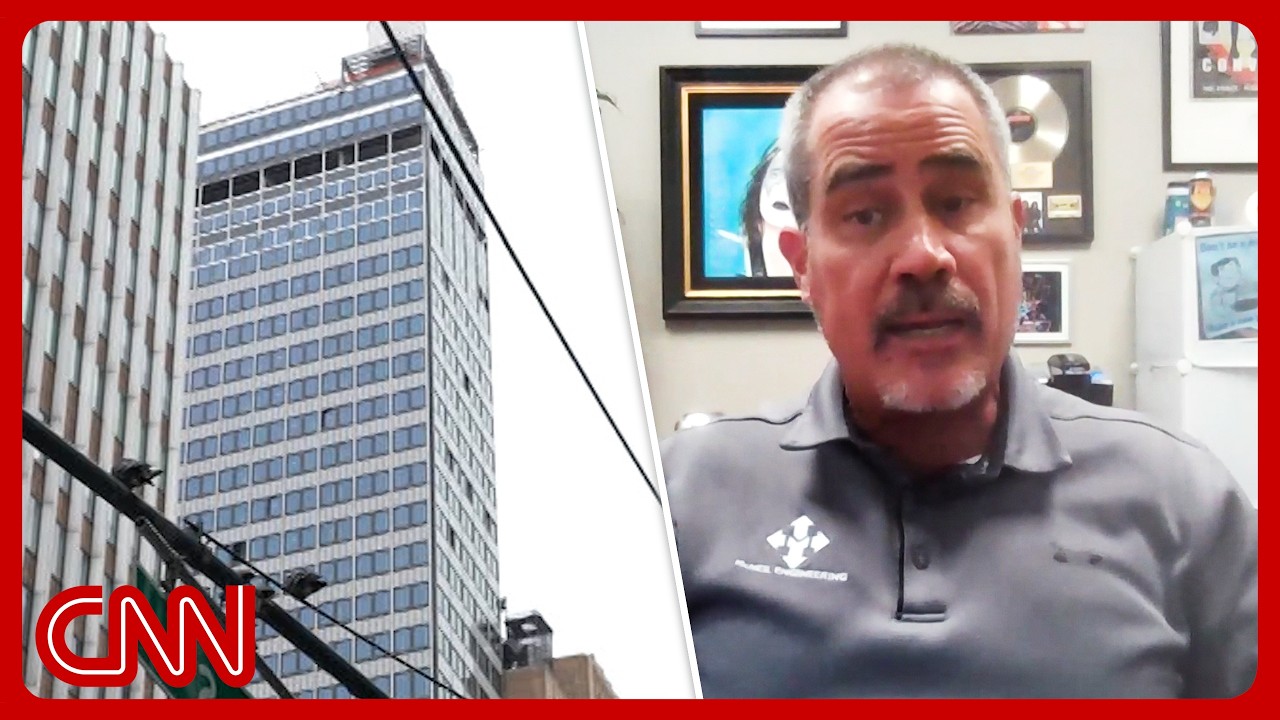
A towering high-rise in Manhattan is currently under intense scrutiny after signs of structural instability appeared this morning, prompting the evacuation of nearby buildings as a safety precaution. Officials reported visible deformation in columns on the 21st floor, raising alarms about the building’s integrity. The New York Fire Department’s assessment noted that the structure is not entirely collapsing but is exhibiting movement, which is a significant cause for concern.
Structural engineer Matthew Robles provided insight into the gravity of the situation. “The column has been completely compromised,” he stated, emphasizing that significant damage has occurred. The lower flange of the column is torn, which means it can no longer fulfill its structural role. This failure not only threatens the immediate area but can also have repercussions on the surrounding structural components, leading to what could potentially manifest as a localized collapse.
The peculiarities of this building’s construction add layers to the risk involved. It is a steel-framed structure—a design that typically distributes loads effectively. However, according to Robles, during renovations, these loads can become irregularly distributed. It is common for structures undergoing significant alterations to experience loads significantly greater than usual due to temporary changes made while beams and columns are modified. This particular renovation is described as the largest in U.S. history, adding an extraordinary level of complexity and risk.
Experts highlight that stabilization efforts cannot commence until the building’s movement is sufficiently halted. At present, engineering responses are focused on evacuation and establishing an exclusion zone around the high-rise. Robles outlined that current measures involve remote monitoring and surveying points to detect any movement in the structure. Once that movement stabilizes, engineers will begin shoring it up. This process involves placing heavy steel pipes and plates, along with structural H-piles and modular steel towers, as a temporary support system.
Public safety remains a paramount concern, particularly given the building’s proximity to a bustling urban area. The evacuation was not limited to the high-rise; several nearby buildings have also been cleared of occupants as a precautionary measure. Local officials have established a significant security perimeter and emphasize their ongoing assessment of the potential for collapse. New York City Mayor Zora Mandani reiterated the ongoing effort to monitor the situation minute by minute, stating, "The number one focus here is the safety of New Yorkers."
Eyewitness accounts add a human dimension to the event. A number of construction workers in the vicinity were evacuated shortly after the alarm sounded, with no injuries reported. The rapid response of first responders has garnered commendations, illustrating the complex interplay between emergency management and structural engineering in high-stakes situations like this.
As investigations are underway, officials confirmed that all construction activities conducted prior to the incident were approved and permitted, raising questions about the factors that could have led to the structural failure. The Fire Chief noted that while the fear of a full collapse is mitigated due to the building’s steel frame construction, localized collapses still pose a serious risk. This distinction is crucial for emergency response teams tasked with maintaining public safety while navigating the inherent dangers of a precarious situation.
As the situation continues to unfold, Manhattan’s urban landscape remains significantly disrupted. Traffic and pedestrian access have been restricted, highlighting the immediate impact of structural issues on daily life in one of the world’s busiest areas. Amid this uncertainty, the focus remains steadfastly on ensuring public safety and addressing the root causes of this structural dilemma. While swift action has been taken, the situation is a stark reminder of the complexities and challenges inherent in urban construction and infrastructure management.